2026-08-06 · Peppu
The Alchemists Won
A Thousand Years Of Fools
Everyone knows the story. Alchemists were the embarrassing prehistory of real science. Deluded men in smoky rooms, muttering over furnaces, trying to turn lead into gold, breathing mercury fumes until their teeth fell out and their minds went. A thousand years of wasted effort, redeemed only when chemistry finally showed up and swept the mysticism into the bin. Every textbook tells some version of it. The alchemists are the joke that comes before the punchline.
That story is wrong, and it is wrong in a specific and interesting way. It mistakes the goal for the method, and then judges the whole enterprise by the goal it happened to name out loud. Yes, they wanted gold. They said so constantly, often to secure funding from people who also wanted gold. But underneath the gold talk was a claim about reality that nobody had made so aggressively before, and that claim turned out to be completely correct.
The claim was this. The world is not a set of fixed essences handed down and sealed. It is made of hidden rules. Those rules can be discovered by a person who works carefully enough. And a person who discovers them can reach into what looks permanent and change it. That is not superstition. That is the founding assumption of every laboratory currently operating on this planet.
The Man Who Invented The Experiment
In the eighth century, a scholar working in the Islamic world under the name Jabir ibn Hayyan produced a body of work so large that historians still argue about how much of it one person could have written. What is not in dispute is what came out of that tradition. Distillation apparatus. Crystallization. Sublimation. Systematic procedures for isolating and purifying substances, written down in enough detail that another person could repeat them and get the same result.
Read that last part again, because it is the whole thing. Written down so another person could repeat it and get the same result. That is the experimental method. It did not arrive with the Enlightenment, fully formed and wearing a powdered wig. It was assembled slowly, in rooms that smelled of sulfur, by people who thought they were decoding a divine language and were in fact inventing the most powerful tool our species has ever built.
The alchemists did not fail to be scientists. They were the first draft of scientists, working without the vocabulary, without the periodic table, without any way to know which of their thousand guesses would survive. They were wrong about most things, which is what it looks like to be first. What they got right was the part that mattered: reality yields to patient, recorded, repeatable interrogation.
Newton's Other Library
Here is a fact that gets quietly skipped in most educations. Isaac Newton, the man who wrote the laws of motion, wrote more words on alchemy than he ever wrote on physics. Something close to a million of them. Not as a hobby, not as a youthful embarrassment he outgrew, but sustained across decades, in code, with the seriousness of a man who believed he was closing in on something enormous.
When the economist John Maynard Keynes acquired a trove of those papers in the twentieth century and actually read them, he was shaken enough to describe Newton not as the first scientist of the age of reason but as the last of the magicians. Robert Boyle, the man whose name is attached to the gas law and who wrote the book that supposedly killed alchemy, also pursued transmutation and lobbied to have the law against making gold repealed so he could work in peace.
This is not a footnote. It tells you that alchemy was not a fringe pursued by cranks while serious people did serious work. For long stretches it was where the most powerful minds available were pointing their attention, because it was the only framework anyone had for the idea that matter itself could be understood and altered. Chemistry did not arrive and defeat alchemy from outside. Chemistry grew out of alchemy the way an adult grows out of a child, keeping the spine and discarding the fantasies.
The Heretic Who Aimed At The Body
The most important turn in the whole story happens in the sixteenth century, with a difficult, arrogant, brilliant Swiss physician who called himself Paracelsus. His argument was simple and it broke the field open. The purpose of alchemy, he said, is not gold. Anyone chasing gold has misunderstood the assignment. The purpose of alchemy is medicine. Turn the whole apparatus, the distillation, the purification, the systematic testing, and aim it at the human body.
That single reframe created what later got called iatrochemistry, chemistry in the service of the body, which is the direct ancestor of pharmacology and therefore the direct ancestor of every compound anyone reading this has ever put into themselves. Paracelsus took the transmutation dream and moved its target from a lump of metal to a living person. He is the hinge on which the entire tradition swings from treasure hunting to what we would now recognize as research.
He also wrote the single most important sentence anyone has ever written about putting substances into a body, usually rendered as: the dose makes the poison. Nothing is safe or dangerous in itself. Everything sits on a curve, and where you land on that curve is the entire question. Five hundred years later that remains the most adult idea in this field, and it is still the one people are most eager to skip past on their way to the exciting part.
The Inner Elixir
While Europe chased the stone, a parallel tradition in China had already split the problem in two. Waidan, the outer elixir, meant working with actual substances, cinnabar and mercury and gold, refining them into something you could swallow. Neidan, the inner elixir, meant treating the body itself as the crucible and the practitioner as both the alchemist and the material, transforming the system from within through breath, discipline, and attention.
Neidan is biohacking with a fifteen hundred year head start. Strip the cosmology and the underlying proposition is one anybody in a modern gym or forum would recognize instantly: the body is not a fixed thing you are stuck with, it is a process you can run differently. That idea has been circulating in human culture far longer than the current wave of people who think they invented it.
Waidan is where the warning lives. Chinese emperors died from their elixirs. Not metaphorically. Mercury, lead, and arsenic taken in pursuit of immortality killed several Tang rulers outright, and the first emperor of unified China is widely thought to have poisoned himself the same way, chasing the same promise. These were not stupid people. They were powerful people with access to the best knowledge available, who ran ahead of that knowledge because the prize was too attractive to wait for. The frontier has always killed the people who sprint on it. That is not a historical curiosity. That is a standing condition, and it applies to now.
The Program Never Closed
So what happened to the research program? The honest answer is that it never closed. It got renamed, split into departments, and handed better tools. Transmutation of elements, the headline goal, was actually achieved in the twentieth century once we understood the nucleus. You can turn one element into another. It is simply expensive and pointless, which is the least romantic possible way for a thousand year quest to be fulfilled.
But the gold was never really the point, and Paracelsus knew it first. The prize that actually mattered was the other one, the one hiding behind the treasure story: a substance that keeps the body from failing. That target did not get abandoned. It got inherited. Biochemistry and molecular biology walked up and took it, and they took it with instruments the alchemists could not have imagined and a language, written in molecules, that the body was already speaking.
Which means the strangest sentence in this whole essay is also the most defensible one. The oldest research program in civilization is currently open, funded, and staffed. It runs in university labs and startup fridges and group chats. It works on the metabolic layer, the signaling layer, the layer of switches that decides which genes speak. It has produced real results, enormous amounts of noise, and a frontier where the knowledge is early and the confidence is loud. It is the same program. Only the equipment changed.
What Winning Actually Looked Like
Nobody announced it. There was no ceremony, no moment where a philosopher's stone was produced on velvet and the ghosts of a thousand dead alchemists were invited to applaud. The victory arrived the way real victories do, in pieces, distributed across disciplines that do not talk to each other, described in language deliberately drained of wonder so it would sound respectable in a grant application.
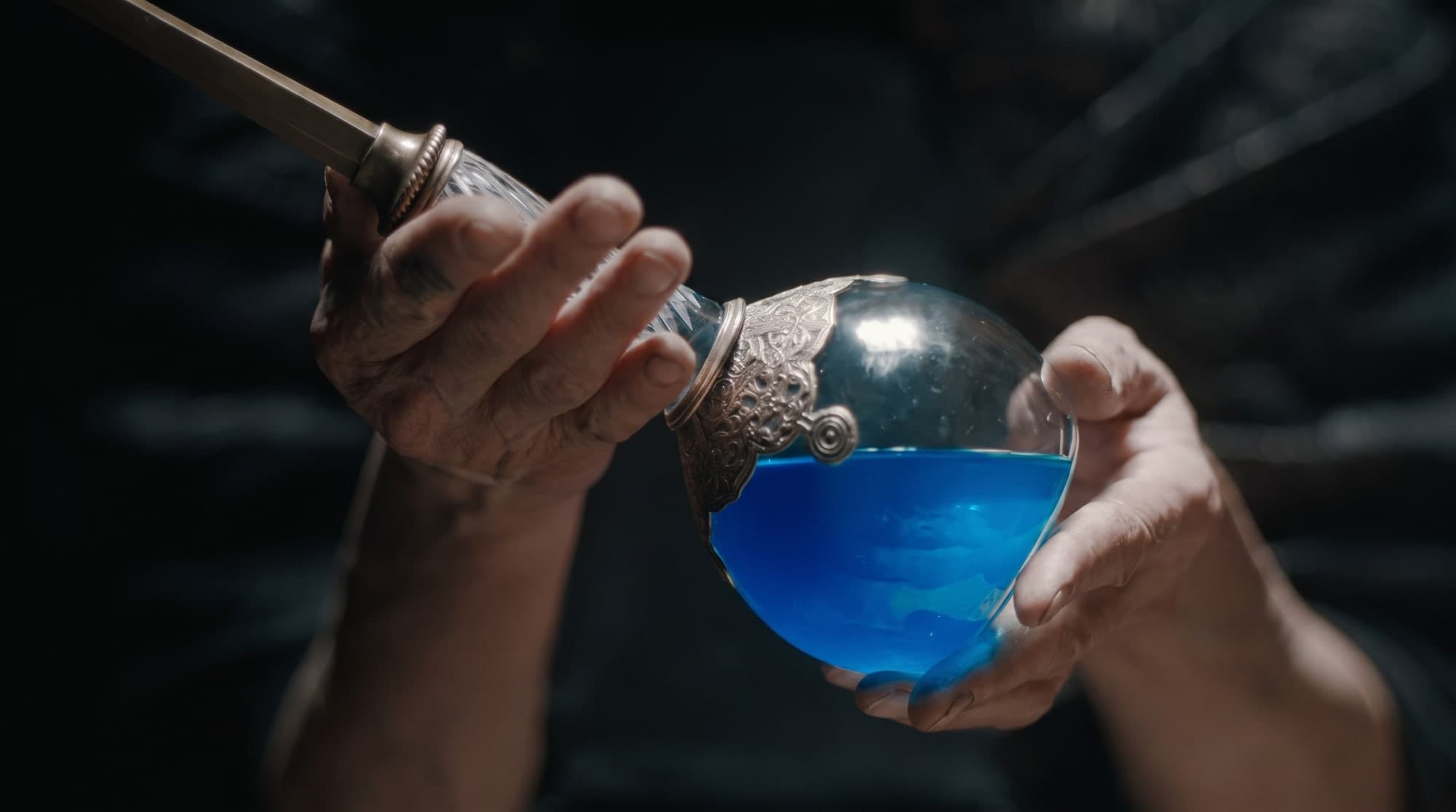
And the object itself is almost comically undramatic. Not a glowing stone. A small glass vial in a cold fridge, next to the eggs, with a sequence on the label and a certificate of analysis in a folder somewhere confirming what is actually inside it. That certificate is the part the alchemists would have envied most, by the way. Not the compound. The ability to know, to an absurd degree of precision, exactly what you are holding. They were poisoned by the absence of that knowledge. We are the first generation with it, and it is worth treating as the gift it is rather than a formality to scroll past.
So the alchemists won. Not the way they wanted, not in their lifetimes, and not in a form any of them would have recognized. They were right about the deep thing and wrong about nearly every surface detail, which is the normal ratio for people who go first. They believed the world had a source code and that a careful enough person could read it. Everyone who has ever run an experiment has been proving them right ever since.
The inheritance comes with a bill, though, and it is the mercury. Respect the compound. Read the certificate. Understand that being early has always been a privilege and a risk wearing the same coat, and that the people who forgot the second half are the reason we remember the first. Read on.
Peppu supplies analytical-grade peptide reference materials, each batch third-party verified with a Certificate of Analysis. For laboratory research use only.
Free to apply. Approved affiliates earn 30 percent direct commission plus a 5 percent approved downline cut, reviewed every 45 days for cash or crypto payout. Application only.